School’s stunning surge in student literacy reflects archdiocese’s overall success
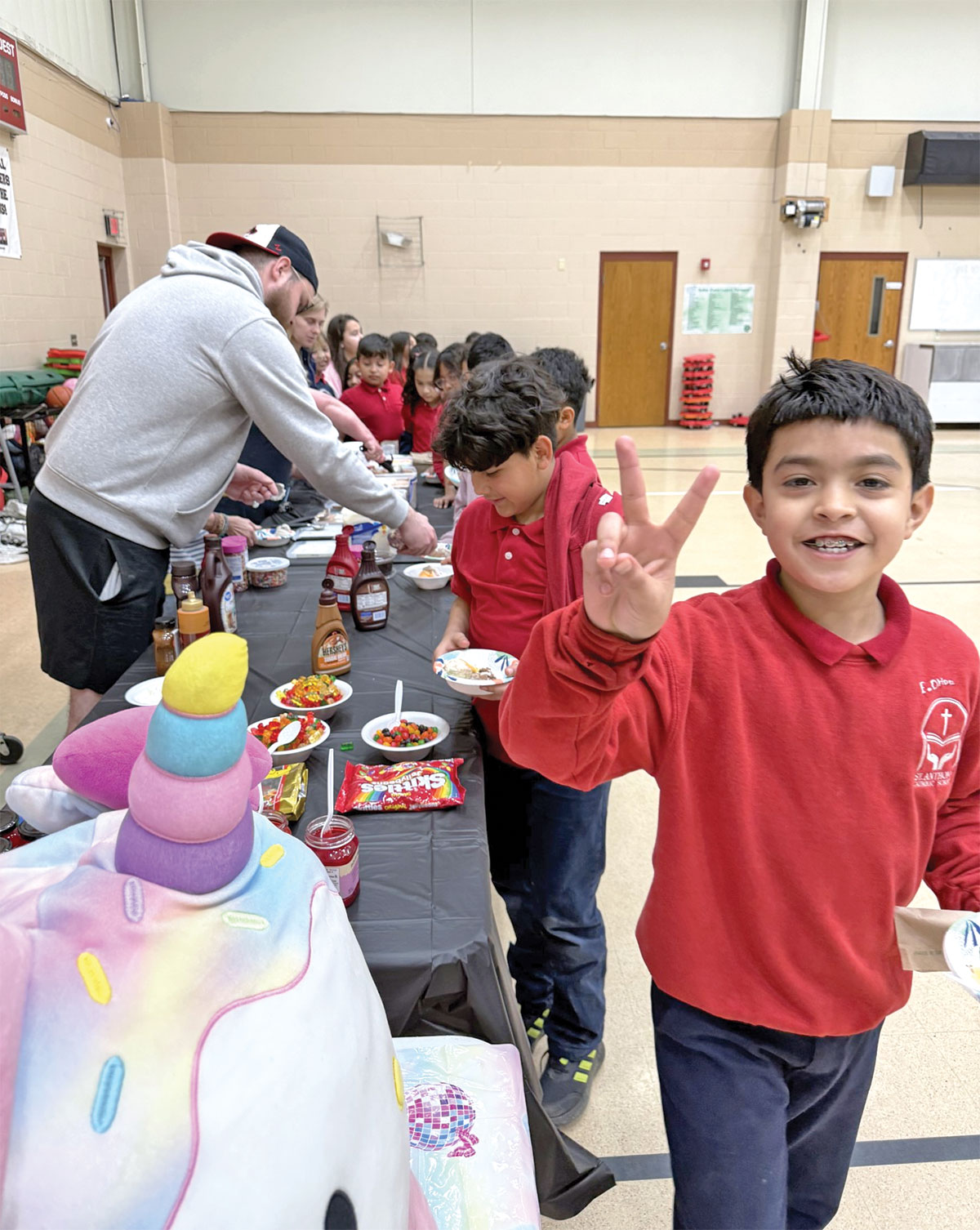
When last year’s third-grade students at St. Anthony School in Indianapolis finished their Indiana Reading Evaluation and Determination (IREAD) testing, they were rewarded for their preparation with an ice cream party. Then-third-grade student Erick Ochoa Ochoa flashes the peace sign after getting his ice cream. (Submitted photo)
By John Shaughnessy
When Madalyn Schepers recently learned the great news from the Indiana Board of Education, the principal of St. Anthony School in Indianapolis was thrilled—because she knew the reading results reflect the incredible difference that could be made in the lives of the school’s students.
“Literacy changes what is possible for a child,” Schepers said. “That is the achievement we are most proud of.”
In just one year, the school made a dramatic improvement in student literacy, with a 45.8 percentage point increase in its Indiana Reading Evaluation and Determination (IREAD) testing.
St. Anthony’s pass rate among its third-grade students improved from 54.2% in the 2024-25 school year to 100% in 2025-26.
“Reaching 100% proficiency is an incredible accomplishment,” Schepers noted about the school, where the student population is 98% Hispanic. “For many of our students, learning to read proficiently in English is happening alongside learning English itself.”
The success of St. Anthony School reflects the overall success of the 54 Catholic elementary schools in the archdiocese regarding IREAD.
Combined, archdiocesan elementary schools achieved a 97.1% total pass rate compared to the state average of 88.7%, according to Brian Disney, superintendent of Catholic schools in the archdiocese.
Disney also noted that 32 of the 54 schools had a pass rate of 100% while 11 more schools had a pass rate of 95% or higher.
“Our Catholic school students, educators and families worked together to ensure our students are readers before the end of third grade,” Disney said. “Our outstanding IREAD test results demonstrate the academic achievement and growth of our Catholic school students.”
The superintendent also praised the St. Anthony School community for the dramatic improvement.
“Through child-centered and data-informed practices, the St. Anthony staff, students and families achieved outstanding results,” Disney noted.
The school’s principal saluted that combined effort, too.
“Our students have benefited from intentional, evidence-based literacy instruction and educators who made a 100% commitment to believing in what every child could achieve,” Schepers said.
“Through consistent instruction and in partnership with our families, students have shown us what is possible when high expectations are matched with the right supports.”
As great as the improvement is, the way the children responded to the news of their success may have delighted the St. Anthony School community even more.
“Our literacy team called each student down individually to tell them the results, and I truly wish we could have recorded the excitement in our offices when our students learned they had passed,” Schepers says.
“The pride and energy were contagious. The kids were crying. The adults were crying. We shared hugs and congratulations and called parents, who were so proud of their children. You could tell they were beaming through the phone. That was the best celebration we could have.”
The principal shared some of the children’s reactions to their achievement.
Nathalie said, “When I found out I passed, it felt good. I was happy! I feel like I can read anything now!”
Erick noted, “I felt happy because it took me three tries. My family was really proud of me, and we went out to dinner to celebrate.”
Their reactions brought to life Schepers’ belief that “literacy changes what is possible for a child.” †